Oceania in Mind: Epeli Hau'ofa's “Sea of islands” Revisited
Synopsis
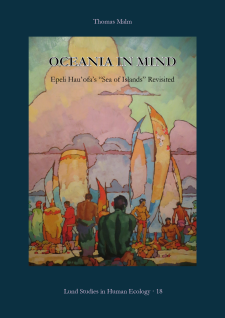
In his essay “Our Sea of Islands” (1993), Epeli Hau‘ofa advocated a pan-territorial view of unity in a culturally and politically fragmented region. Focusing on Oceania as “a sea of islands” rather than as “islands in a far sea” would mean seeing “things in the totality of their relationships”. The sea is “the single common heritage” for all its people, he argued. They had travelled freely until the 19th century when imperialism erected boundaries that resulted in the notion that the islands were small, isolated, and poor in resources. By the end of the 20th century, they were once again enlarging their world through emigration. In this book, his argument that it was only a result of modern imperialism that island people became “confined to their tiny spaces” is put into question; there were isolating cultural and geographical factors in Oceania long before that. It is argued that smallness and remoteness do matter for income as well as for the more malign effects of globalization, and that an analysis of “things in the totality of their relationships” must consider global connections far beyond the “Sea of Islands”.
Thomas Malm is a biologist, social anthropologist and Professor Emeritus of Human Ecology at Lund University.
Downloads
Published
May 11, 2026
Series
Print ISSN
1403-5022
Categories
Copyright (c) 2026 Thomas Malm
License

This work is licensed under a Creative Commons Attribution-NonCommercial-NoDerivatives 4.0 International License.
Details about this monograph
ISBN-13 (15)
978-91-90202-24-1